
Testing Invasive Plant Removal Strategies at Fox Lake
With support from a TPPF grant, the Fox Lake Property Owner’s Association in Oakton, Virginia undertook a hands-on trial to evaluate different methods of invasive plant removal on community-owned land. Two acres of common property were divided into three distinct areas, each managed using a different approach, allowing the community to compare effectiveness, labor demands, and ecological impacts firsthand
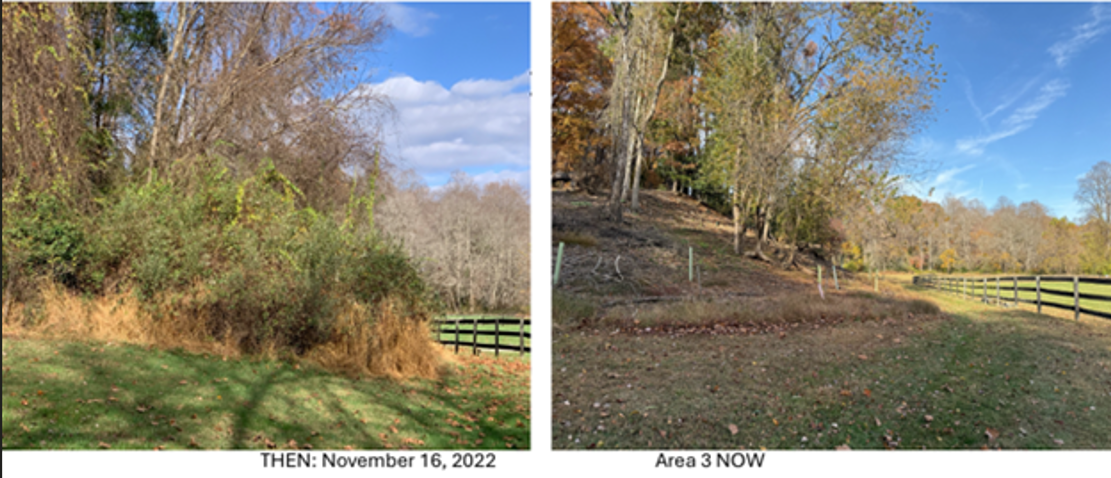
The project tested sheet mulching, manual removal without herbicides, and targeted herbicide application. In areas with dense, hard-to-penetrate vegetation, forest mulching was used as an initial step to clear invasives while minimizing soil compaction and erosion. Sheet mulching with cardboard, tarps, and donated mulch was applied in a forest-lined entrance area, relying heavily on volunteer labor and community contributions. A steep forested hillside, where mulching was impractical, required multiple rounds of herbicide application to control persistent species such as autumn olive.
To reduce herbicide use and prevent invasive seed formation, string trimming was conducted across all areas, with careful flagging and protection of native plants. The results highlighted important tradeoffs. Herbicide-treated areas showed the least invasive regrowth but also fewer native plants. Sheet mulching proved about 80 percent effective, encouraging some native species to return, though it required significant time and ongoing maintenance. Manual removal without herbicide was the least successful, as invasives quickly re-established themselves.
Overall, the project demonstrated that no single method is a complete solution. Long-term success will depend on continued monitoring, repeated treatments, and active replanting with native species to ensure invasive plants do not reclaim these restored spaces.