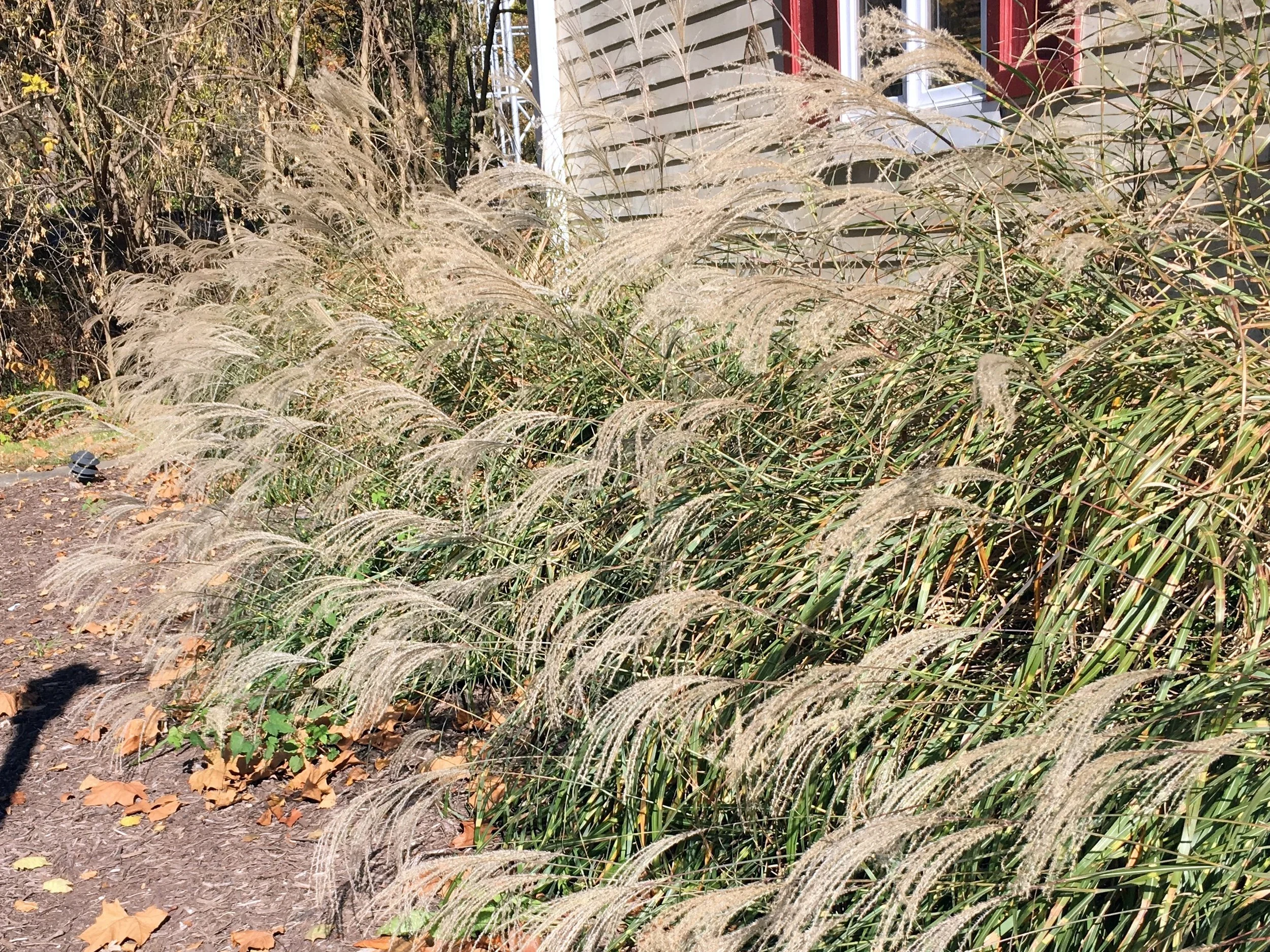

Miscanthus Grass
Ornamental grasses are beautiful in any landscape, and Miscanthus, or Silvergrass as it’s commonly called, is a common one to see in our area. Tall, with beautiful flowers and seed heads, it paints a lovely picture until it gets overgrown and floppy. The problem is that it is invasive and difficult to get rid of.
Silvergrass spreads by both rhizomes - the roots - and by all those hundreds or thousands of seeds in its feathery seed heads. The rhizomes are aggressive, making manual removal more difficult, because it will grow back if even a small piece is missed. The seeds are spread far and wide by the wind, birds, and even by sticking to humans or their vehicles.
Why is silvergrass bad? It forms dense monocultures, crowding out any native plants. It also is not nutritionally beneficial to our native birds and insects. So, it’s pretty, but also pretty useless.
How can I remove it? If you are working on a clump in your yard, digging it out with a pickaxe works well. Once it has spread, chemical management in the spring, when it is less than two feet tall and before it has set seed, may be the only practical option for this plant. Follow the instructions on the label. If you are removing it manually, try to get every last piece of the roots, and keep an eye on the site so you can remove any new growth. Do not dispose of any part of this plant in your compost pile - throw it in the garbage.
There are many native grasses that can be used as ornamentals in your yard or garden instead of Miscanthus. Check out Little Bluestem, Indian Grass, Switchgrass, and Pink Muhly Grass on the Plant NOVA Natives website.
Join the movement! Fairfax Tree Rescuers PRISM is a community-wide effort to save our trees from invasive plants. https://www.fairfaxprism.org/
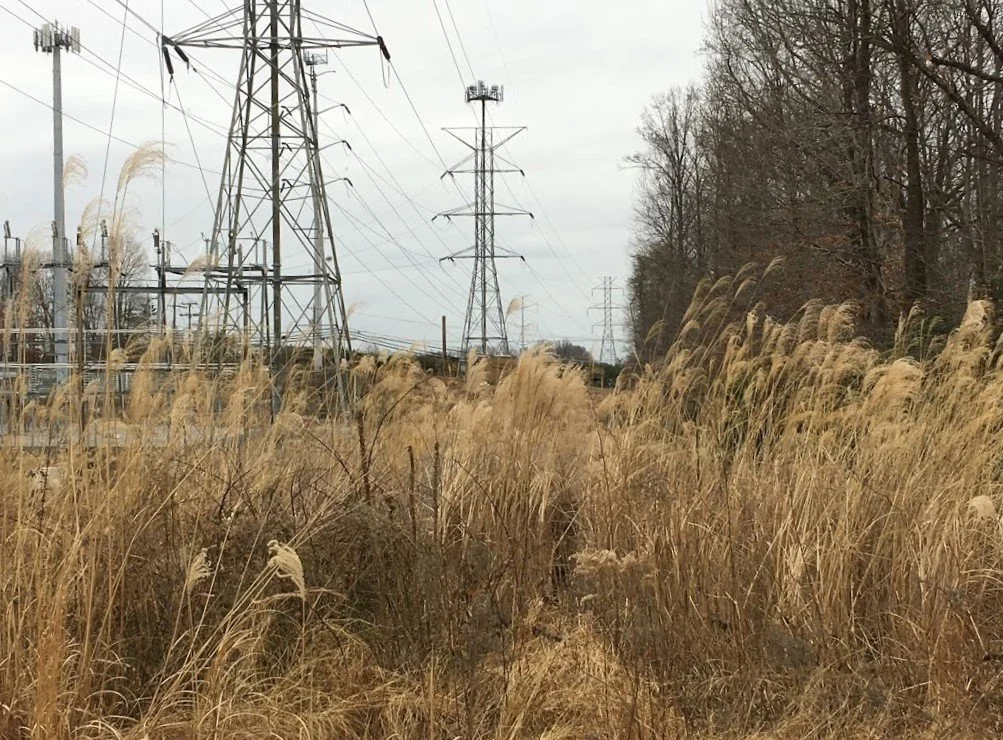
Miscanthus (Chinese Silvergrass) often invades under power lines.