
ITALIAN ARUM - EDRR species
Italian arum (Arum italicum) is an invasive ornamental plant native to Europe. While its striking foliage may look attractive, it is a significant threat to local ecosystems. It emerges in late fall and remains green throughout the winter, allowing it to shade out native species that germinate in the spring and prevents new species from establishing. Additionally, all parts of the plant are toxic to humans and many animals.
Why is it a threat?
• Displaces Native Flora: It forms dense mats that shade out small native plants, such as spring ephemerals.
• Toxic and Irritating: The plant contains a large amount of calcium oxalate crystals, which can cause skin irritation to sensitive people and severe irritation of the mouth and throat if ingested, sometimes leading to hospitalizationb or death.
• Extremely Resilient: It is difficult to eradicate and requires multi-year vigilance to ensure complete removal.
• Easy to Spread: Improper removal or disposal often leads to further infestations.
Identification
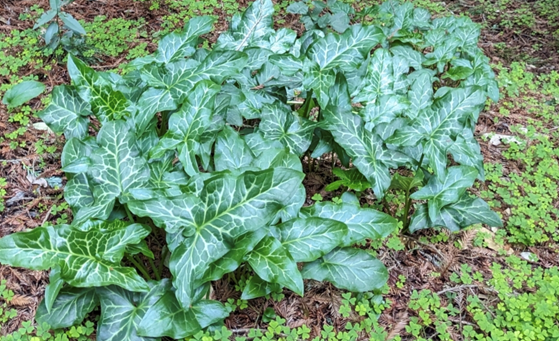
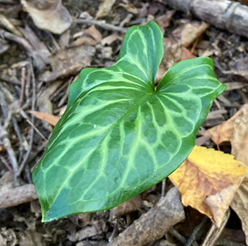
• Leaves: Dark green, arrow-shaped leaves with prominent light green, white or silver veins. Some variants may feature purple splotches.
• Flowers: A distinct, unpleasant-smelling "spathe and spadix" flower emerges in early spring.
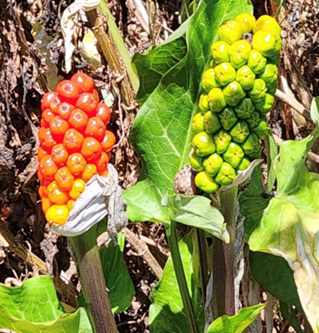
• Berries: In late summer (August–September), as the leaves wilt, the plant produces tight clusters of berries that transition from green to a vibrant orange-red.
How to Remove It
Manual Control
• Dig Deep: Manual removal can be effective for small patches, but you must dig deep to remove all tubers. Any remaining "bulblets" will regrow.
• Protective Gear: Always wear long sleeves, pants, and gloves to protect your skin from irritating sap.
• Proper Disposal: Bag all plant parts and tubers; dispose of them in the trash. Never compost Italian arum, as it will survive the process and spread.c
• Quarantine the Soil: Do not move soil from the infested area until you are certain the species has been eradicated.
Chemical Control
Chemical management is currently being researched, as many herbicides only kill the foliage while leaving the tubers unharmed. For the most current herbicide recommendations, please consult your local VA Cooperative Extension Office.
More information:
a) Italian Arum Cowlitz County Noxious Weed Control Board
b) Fairfax County’s EDRR Website
c) Italian Arum: A “Dirty Dozen Plant” by Sarah Coffey
d) Italian Arum Washington State Noxious Weed Control Board