

The Race Against Time: Early Detection & Rapid Response (EDRR)
Many invasive species have been a problem for decades. However, others are just beginning to take root in our local ecosystems. When a new plant starts to invade the natural landscape, there is a narrow window of opportunity to eradicate it before it spreads out of control.
This process is represented by a sigmoid curve known as The Invasion Curve. Plants that are expected to become well-established if left uncontrolled are categorized as Early Detection Rapid Response (EDRR) species. Currently, there are 41 species listed on the Fairfax County EDRR website that are being watched closely.
How do plants end up on the EDRR list?
The process is a blend of field ecology and community data:
· Field Observations: When ecologists spot a new plant in the landscape, they monitor its spread and research its history elsewhere to determine if it poses a threat.
· Community Science: With tools like iNaturalist, the "eyes on the ground" have multiplied. Volunteers, hikers, and hunters now report sightings that might have otherwise gone unnoticed.
· Predictive Research: Recent research provides ecologists with insights into which species are likely to become invasive before they even arrive, allowing for a proactive "watch list."
· Collaboration: Plants don’t respect county or state lines. Organizations now collaborate through groups like the National Capital Regiona Invader Detectives on iNaturalist.
If a high-threat plant enters Fairfax County or is found in a neighboring jurisdiction, it is added to the EDRR list. This designation is vital—it helps the county secure necessary funding and serves as a powerful education tool for the public.
Why is the problem accelerating?
As our climate changes, so does the map of plants that can survive in our region. Invasive plants seem to be getting a leg up when it comes to climate change. Unfortunately, this shift is happening too quickly for our local wildlife. Native insects and herbivores cannot adapt fast enough to eat these new plants, giving the invaders a "free pass" to grow without any natural checks or balances.
What Can You Do to Help?
You don't need to be a professional ecologist to make a difference. Here is how you can take action:
· Be a Detective: Learn to identify EDRR plants. If you spot one in a natural area, record it on iNaturalist.
· Join the Search: Become a member of the Capital Area Invader Detectives project.
· Spread the Word: Educate neighbors about the dangers of certain ornamental plants, especially those known to escape home gardens and "jump the fence" into our woods.
· Get Your Hands Dirty: Join an EDRR team in your local park! You can reach the Fairfax County Park Authority’s EDRR team at FCPAInvasiveManagement@fairfaxcounty.gov.
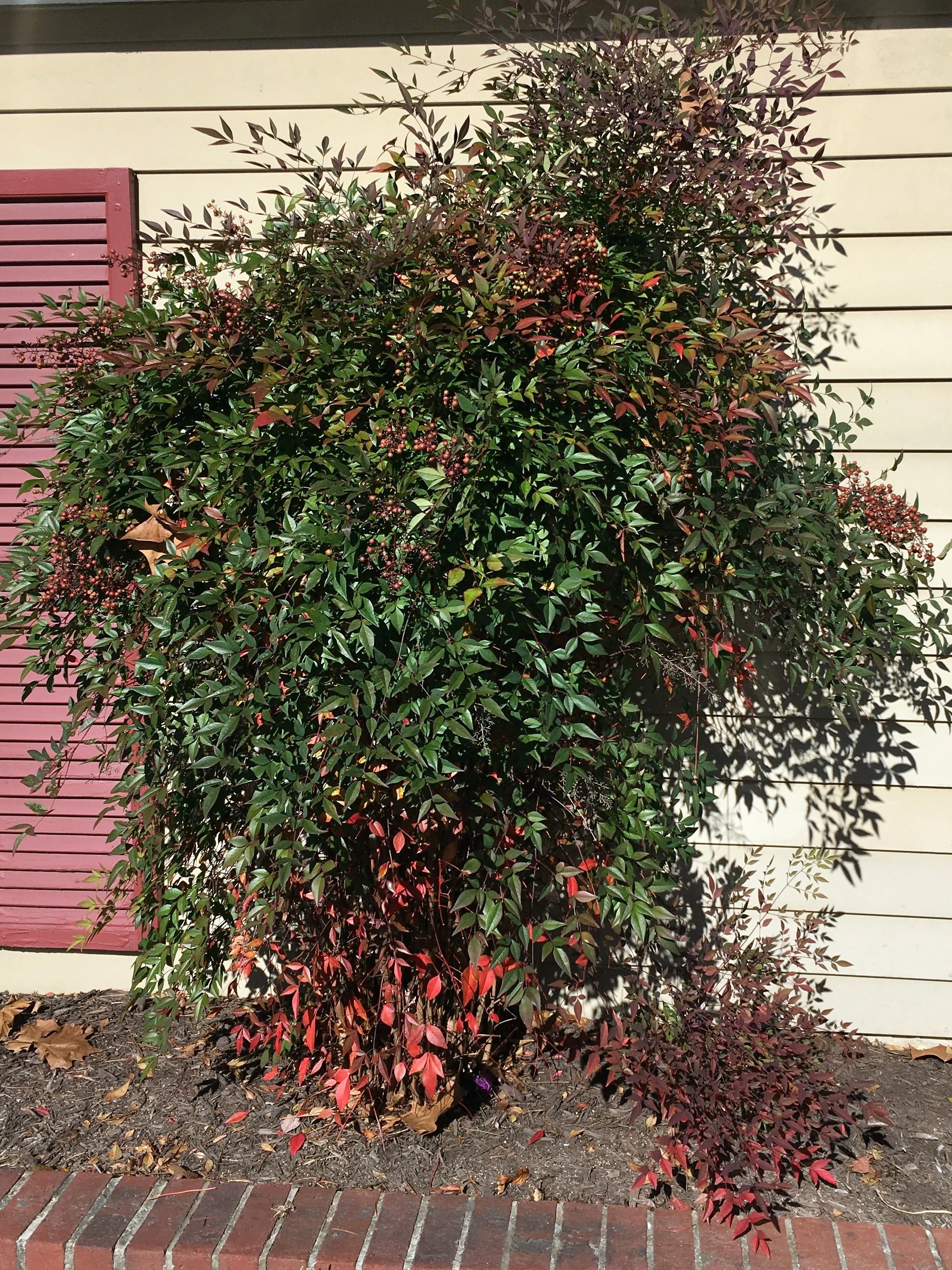
Nandin domestica has only recently invaded our natural areas, providing an opportunity to act before it gets out of hand.