
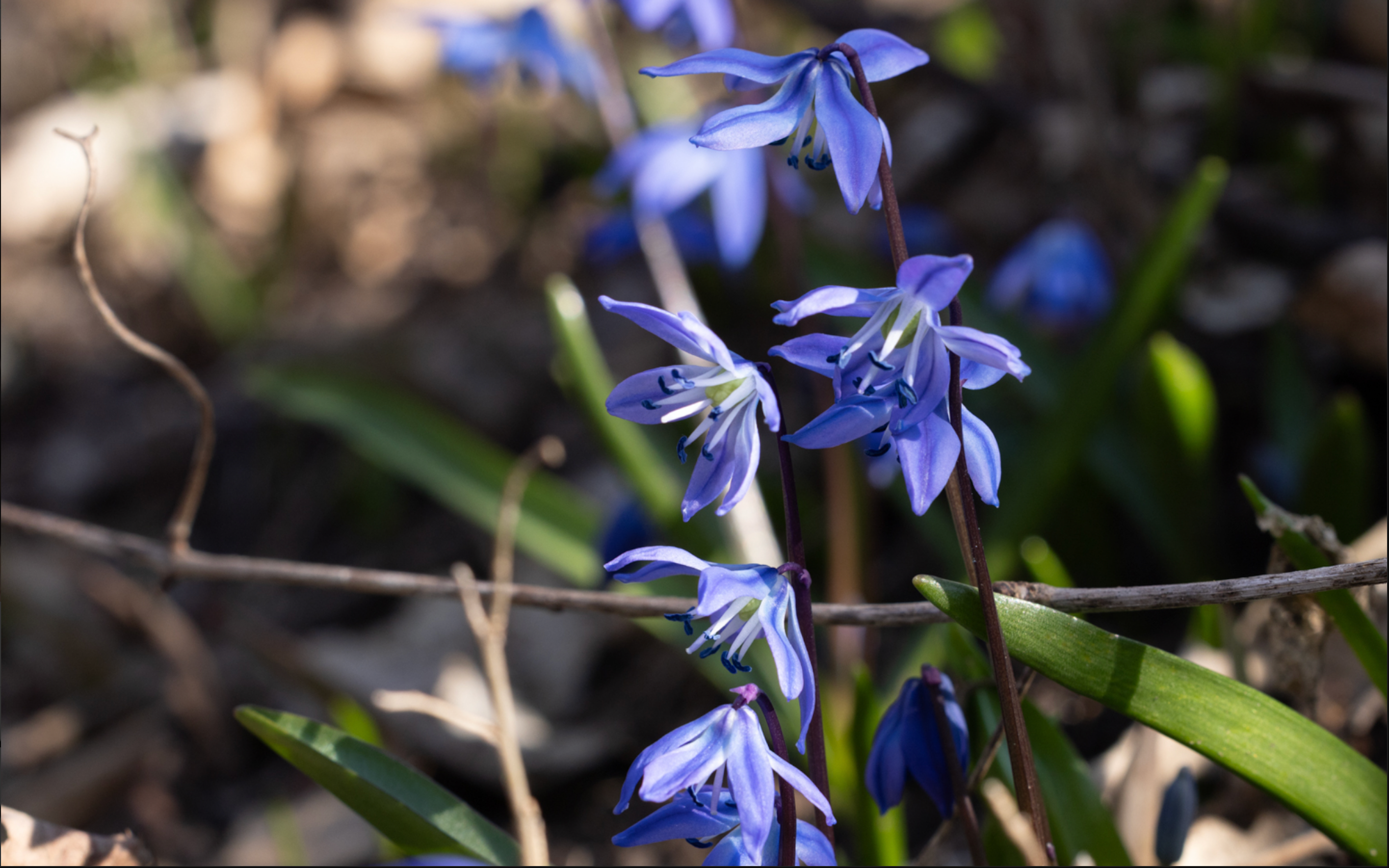
EDRR Fact Sheet: Siberian Squill (Scilla siberica)
Overview
Siberian squill is a small but tough flowering plant. Despite its name, it is not actually from Siberia! It is native to Southwest Russia, the Caucasus, and Turkey. While it was originally brought to the United States as a fragrant garden plant, it has escaped into the wild and is now becoming a problem in our local ecosystems.
Why Is It a Threat?
This plant is extremely hardy and can survive very cold weather. Because it is one of the first plants to bloom in the spring, it gets a head start on our native wildflowers.
- Outcompetes Natives: It quickly soaks up nutrients and water, leaving little left for native ground covers.
- Rapid Spread: It spreads two ways—by dropping seeds and by growing new bulbs underground.
- Toxic: Every part of this plant is poisonous if eaten by humans or animals.
How to Identify It
Siberian squill is easy to spot in early spring when most other plants are still brown. Look for these features:
- Leaves: Stiff, grass-like leaves that grow about 5 inches tall.
- Flowers: Small, 1-inch dark blue flowers.
- Petals: Each flower has six petals and hangs downward toward the ground.
- Habitat: It thrives in well-drained soil and can grow in both full sun and deep shade.
Management and Removal
Because this plant spreads through both seeds and underground bulbs, it can be tricky to get rid of.
Manual Removal - Dig deep. You must remove the entire bulb. If any part of the bulb stays in the ground, it will grow back.
Deadheading - Remove flowers as soon as they appear. This prevents the plant from dropping seeds and spreading to new areas.
Chemical Control - Pre-emergent herbicides can be used to stop new seeds from growing in the spring.
Note: Always wear gloves when handling Siberian squill since it is toxic. If you find this plant in a natural park area, please report the location to help protect our native habitats!