
What to do with all that debris after you cut it down? It depends on the location, the plant species, and the volume.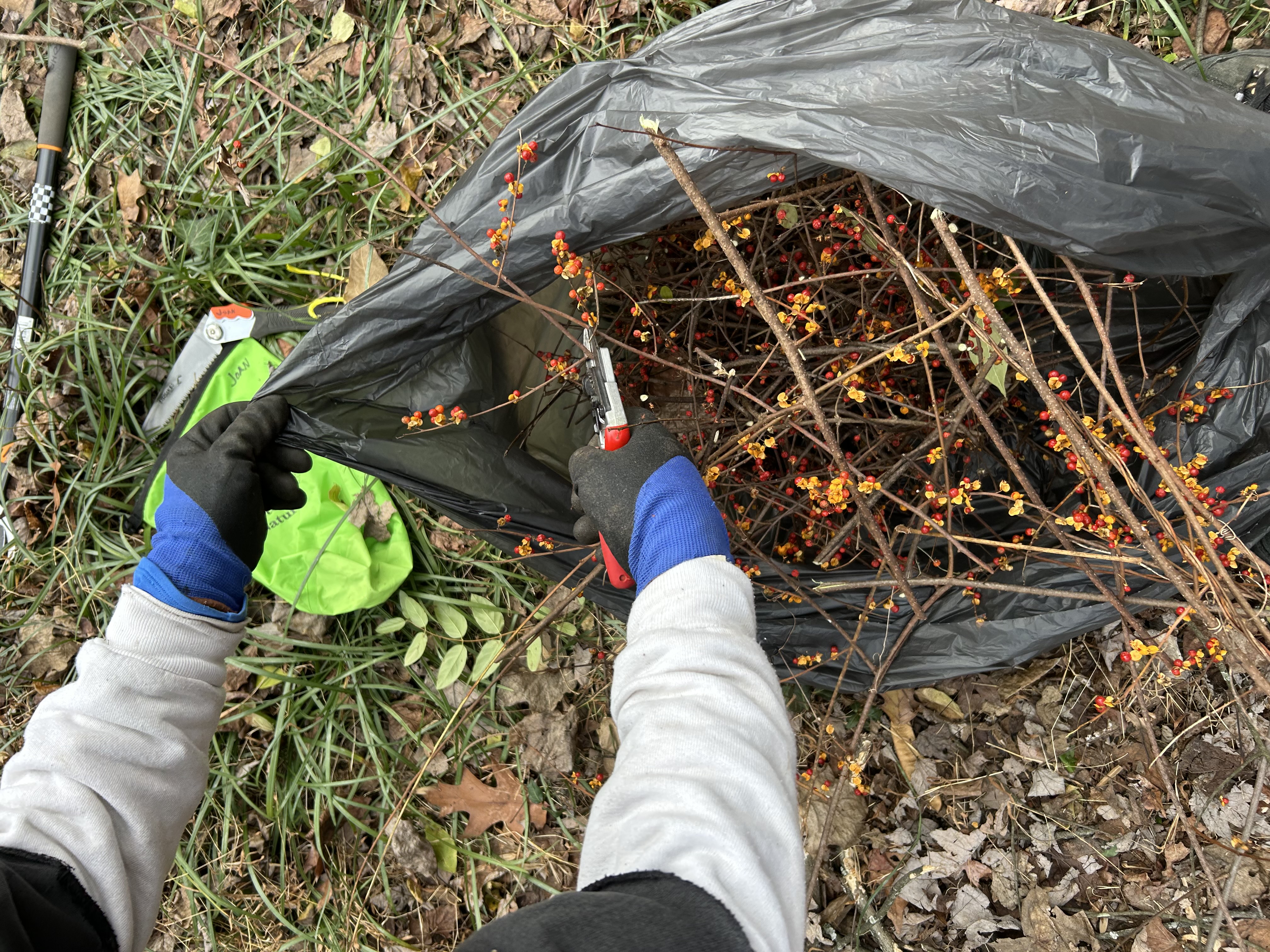
Some general principles
- Invasive plant seeds and roots or anything that could propagate should not be put out with yard waste. That material gets turned into mulch, which could spread the invasive plant all over the county. Examples include English Ivy that is still alive and could reroot, and Japanese Knotweed which can grow up from the tiniest cut stems.
- Some plants have a chemical property called allelopathy that interferes with the growth of other plants. You do not want to leave them in natural areas. Examples include Autumn Olive and Garlic Mustard.
Other than that, it is best whenever possible to leave plant material in place to decay naturally. Plants with roots can be hung up to air dry and kill the plant. It can be helpful to cut branches into smaller pieces to lie flat on the ground. Bulky debris where invasive vines are present tends to get covered by those vines and smother everything underneath.
Plants that could spread or that have allelopathy
- Put small amounts in plastic bags in your regular trash, which gets incinerated. Put a sign on the bag that says “Invasive Plants.”
- If you aren’t removing the entire plant, at least clip off the berries and seeds so they can get incinerated
- Take larger quantities to the I-66 Transfer Station or I-95 Landfill Complex., where you should inform the person at check-in that the material needs to be incinerated. There is a fee for disposal
Other plants with no seeds or other risk of spread, and no allelopathy
- Dispose as you would other yard debris.