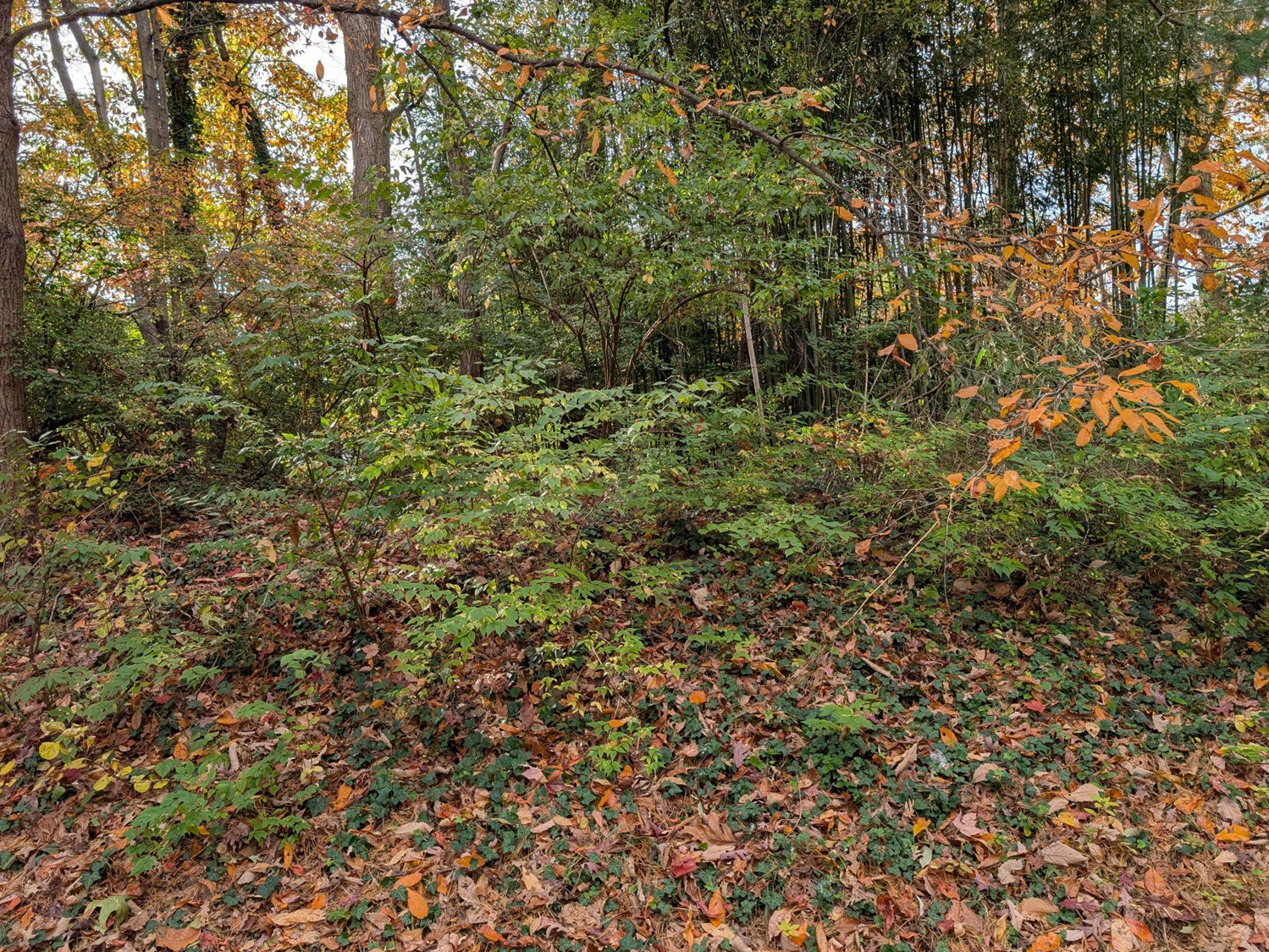
 Before Restoration
Mini-grant Work Inspires Community Members to Extend Efforts in Reston
The Barton Hill Cluster Association created a community-driven project to remove invasive vines, shrubs, and bamboo from priority areas in the community. Since involving the community in the project, several residents have expressed interest in removing invasive plant species on their own properties, and Barton Hill Cluster has offered to support their efforts. Additionally, resident volunteers began working on a new site in the community after the grant-funded project.
Main Species of Concern: Japanese honeysuckle, English ivy, multiflora rose, burning bush, and invasive bamboo.
Management Strategy: Invasive plant removal was a combined effort of the hired and grant-funded contractor, Cardinal Landscaping, and community volunteers.
- Work by Volunteers: community members removed bamboo from the targeted area and applied herbicide to freshly cut stumps. They also removed English ivy by hand.
- Work by the Contractor: Cardinal Landscaping removed invasive shrubs from the targeted area and applied herbicide to the freshly cut stumps.
- Sites will be revisited with the goal of removing any repopulating invasive plants and monitoring regrowth of native species in the understory. The association plans to do 2-3 revisits in the last half of 2026 and 1-2 times per year in 2027-2029.
The association contacted the local landfill to ensure proper disposal of the bamboo shoots. They proposed targeted herbicide applications to avoid significant soil disruption that would encourage the regrowth of invasive species like Japanese stiltgrass.
Project Outcomes
Volunteer hours: At least 14 volunteers worked a total of 94.5 hours over 3 work days.
Trees saved: About 90 trees were rescued, including 60 mature trees and 30 smaller trees. The community also planted two native dogwood trees in the targeted areas.
Scope of the grant: Approximately 1-2 acres of land were rescued from invasive plants.
Financial Summary
Barton Hill Cluster requested a reimbursement of $3,000 and were required to meet a 50% contribution match of $1,500. They completed 94.5 volunteer labor hours to meet contributions, equaling a $3,287.66 match ($34.79/hr), more than doubling the minimum requirements.
Community Education
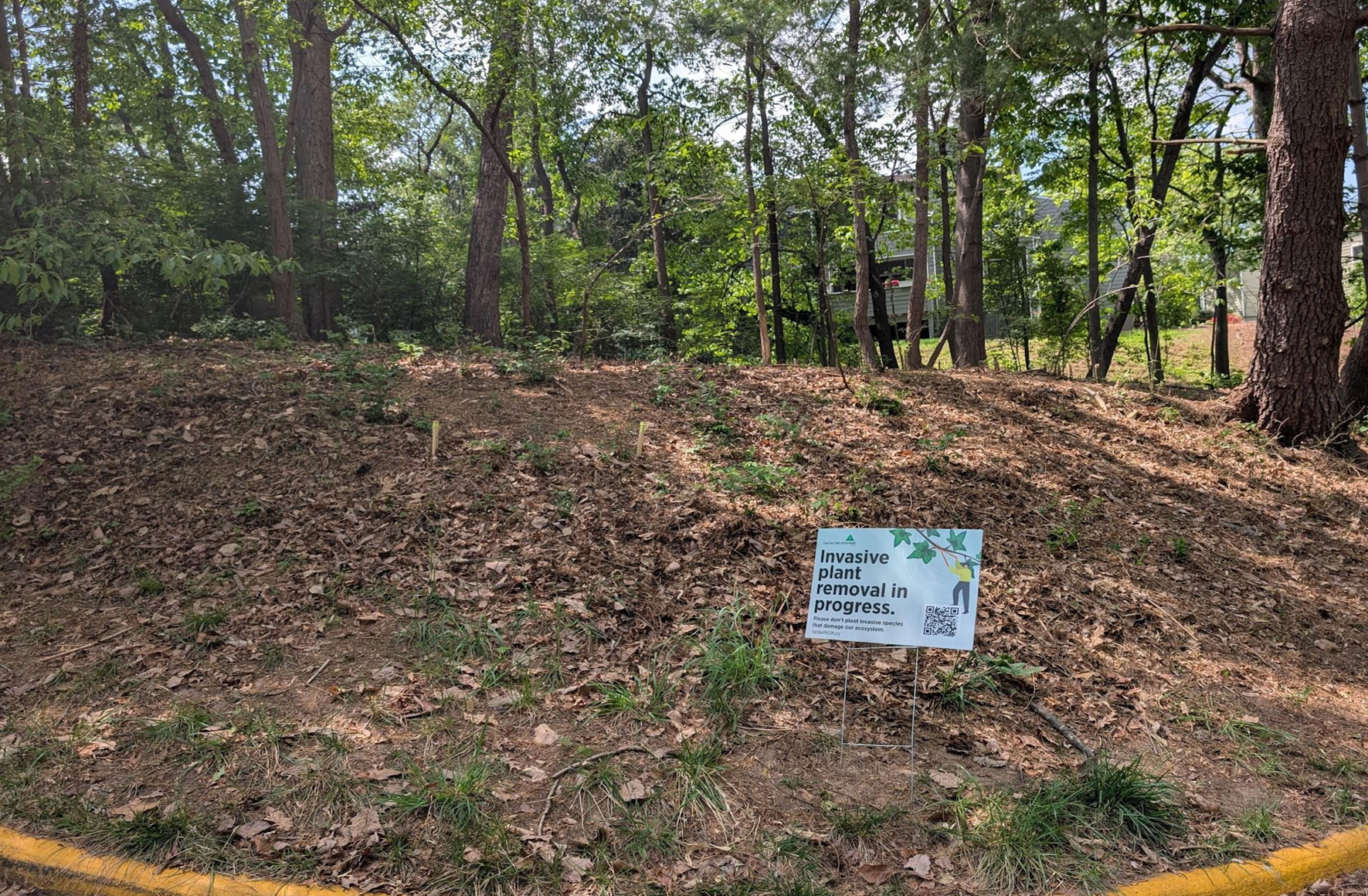 After Restoration
- The Fairfax PRISM’s invasive removal sign was displayed in the highly visible work areas during the event and for several days afterward to increase community awareness.
- Two community events–one in November and another in April–were held to manually remove invasive plant species from a heavily infested Barton Hill Cluster common area. The community email listserv was used to organize the event and included links to Fairfax PRISM’s website and information on the targeted plant species.
- More than a dozen residents attended volunteer events, including five children. Volunteers were provided guidance on how to identify and remove multiple invasive plant species while leaving the few remaining native plant species. Two community members with previous experience in invasive plant removal helped guide folks in identification and avoiding any safety concerns.
Next Steps
- Barton Hill Cluster plans on collaborating with the adjacent HOA to tackle land between their clusters. They will reach out to them regarding the next grant cycle with Fairfax PRISM.
- As part of the long-term plan, finished sites will be revisited 1-2 times per year to remove invasive species that attempt to repopulate the area and monitor regrowth of native species in the understory.
- Several residents have expressed interest in removing invasive plant species on their own properties after this experience, and Barton Hill Cluster has offered to support their efforts.
- The association has started working on a third site where volunteers have already begun cutting invasive vines (English ivy and bittersweet).