
We estimate that approximately a million trees in Fairfax County are at risk from non-native, invasive vines. Unless our community takes action, many if not most of our parks and natural areas may have “failed” by the end of the century, meaning the trees will have come down and not been replaced. Invasive vines kill by strangling, smothering, weighing down, and tearing the limbs off full-grown trees. As trees come down, the added light allows other invasive plants to grow more vigorously at the ground level, obliterating the native tree seedlings. We are already seeing this happen in pockets around the county. Neighborhood shade trees are also at risk, particularly from English Ivy and Wintercreeper, where residents are unaware that these vines don’t belong on their trees.
Be careful with the native vines!
Our native vines seldom injure trees and are an important food source for birds. Look carefully before you condemn a vine! We want to preserve the native plants wherever possible.
Natives commonly seen in the wild


Natives less commonly seen in the wild


Some major tree-killers
English Ivy – Clings to bark, weighs down trees
English Ivy is so common on trees that many people have come to think of it as normal. What they don’t realize that what is now a thin layer of ivy will grow into an enormous load on the trunk and branches, significantly shortening the life of the tree. Once it gets up high, it produced berries which birds carry to all the neighbors’ yards. Ivy growing on the ground smothers everything else and provides habitat for mosquitoes.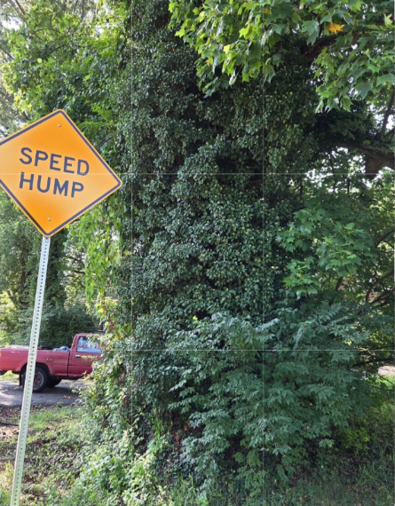
Wintercreeper – Clings to bark, weighs down trees
On trees and the ground, Wintercreeper has the same effect as English Ivy. If no tree is there to climb, it can also grow into a free-standing shrub.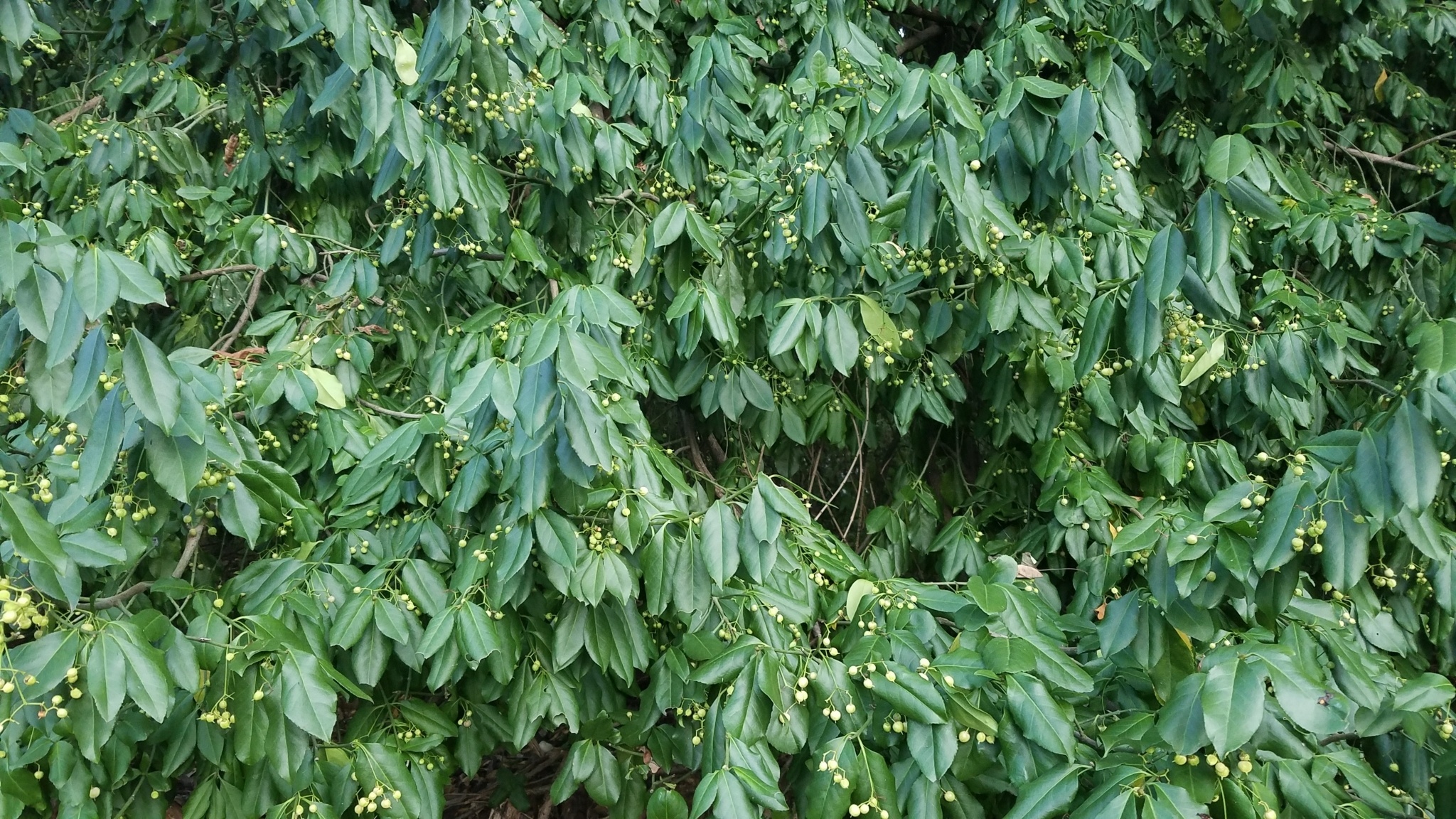
Porcelain Berry – Smothers trees
Have you noticed stands of trees covered in greenery like a shroud? Often you are looking at Porcelain Berry, which grows rapidly and cuts off the light from trees. On the ground, it grows into vast, deep masses. The stems, leaves and tendrils resemble those of the native grape vines, but the brightly colored berries are distinctive.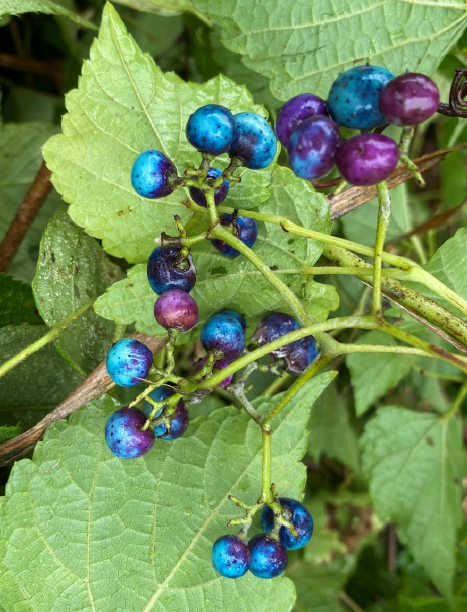
Kudzu - Smothers trees
“The vine that ate the south” was brought in for forage and erosion control and turned into a nightmare. It can grow as much as ten feet in a day. Where it is, the sight is horrifying. It is a priority target for our community effort because, terrible though it is, it is a relatively recent arrival to Fairfax County and still unusual enough that we should be able to control it and prevent it from spreading further – IF we come together as a community to combat it. If you see it anywhere, please report it.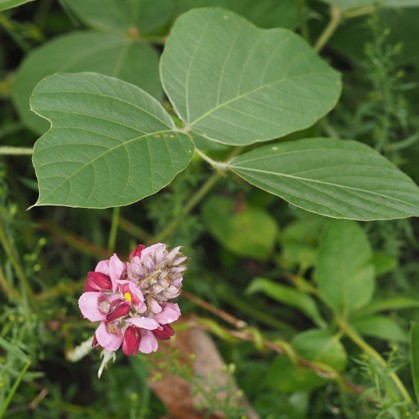
Five-leaved Akebia - Smothers trees
Another priority target for the same reason: this vine smothers acres of trees with its leaves but is unusual enough in Fairfax that we should be able to get it under control.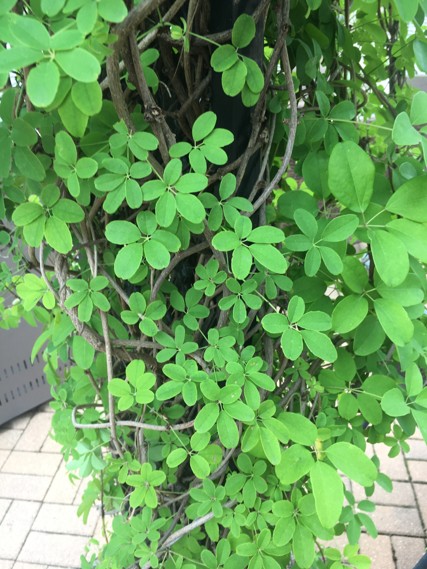
Japanese Honeysuckle - Smothers and strangles
Climbing up to 20 feet, in addition to smothering trees with its leaves, Japanese Honeysuckle twines around their trunks and girdles them as they try to grow. Over time, the older vines become thick tangles that add to the weight on the tree. In open areas they often form extensive mats punctuated by lumps, under which are often found invasive Multiflora Rose shrubs or native blackberry stands.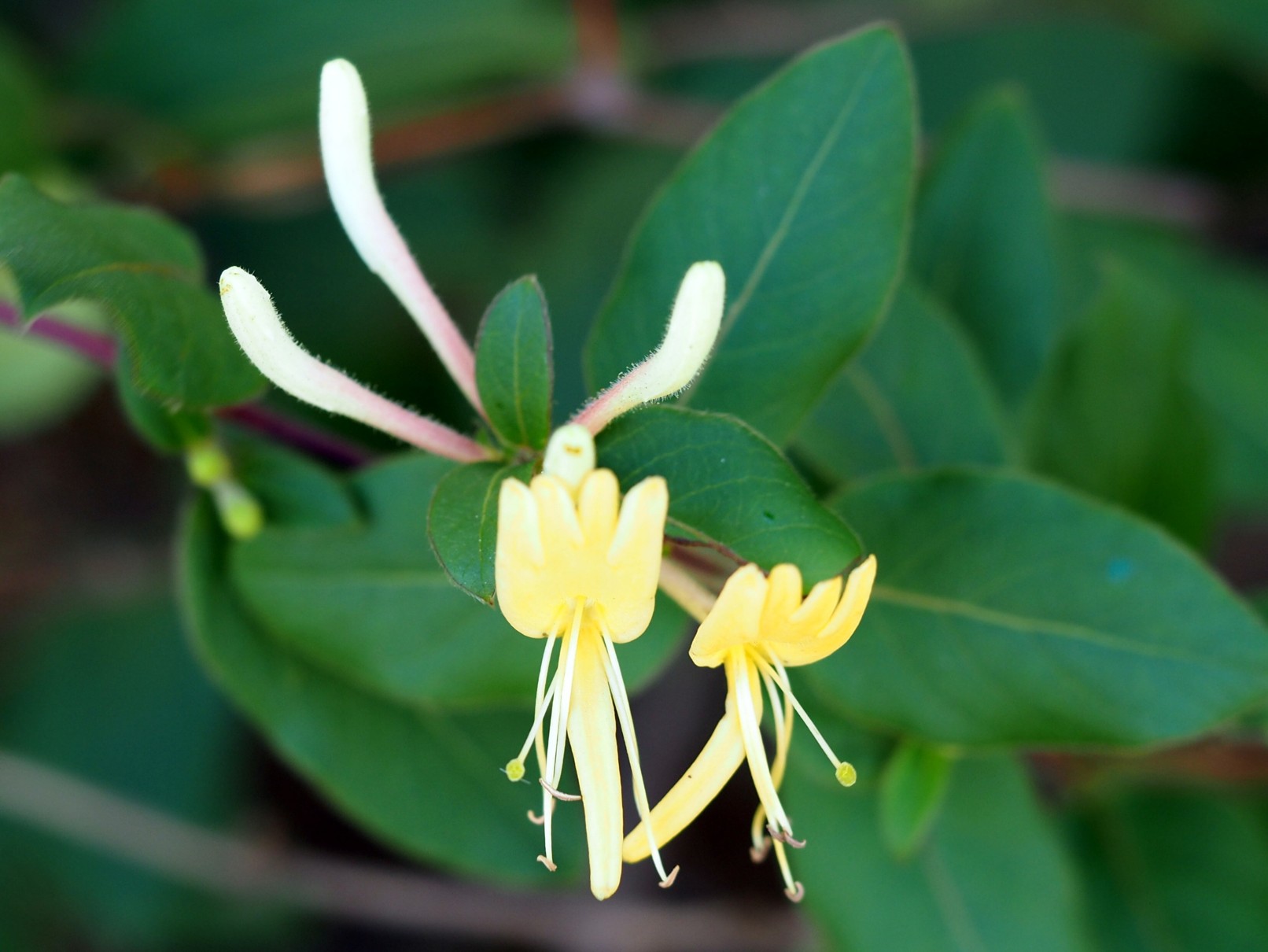
Asiatic (Oriental) Bittersweet – Smothers and strangles
Another strangler, this vine also blankets tall trees. The stems get thicker and heavier over time. Once they have encircled a branch, they tighten up and call pull even large branches right off.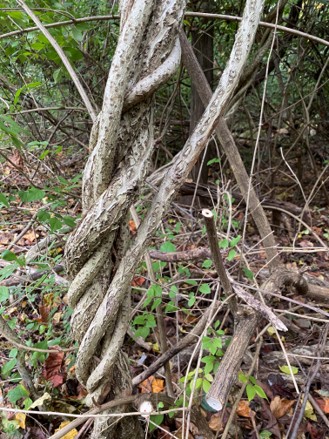
Japanese and Chinese Wisteria - Smothers and strangles
The damage caused by trees is truly horrific. The stems can grow as thick as small trees, reaching up from the ground to branches above or twisting around trees in huge, strangling bands. They literally tear large trees limb from limb and pull off their tops. Their runners spread in all directions and send up more vines that form thick shrubs, exterminating the undergrowth. Like Kudzu and Five-leaved Akebia, it is still uncommon enough in Fairfax/Falls Church that we should be able to get it under control.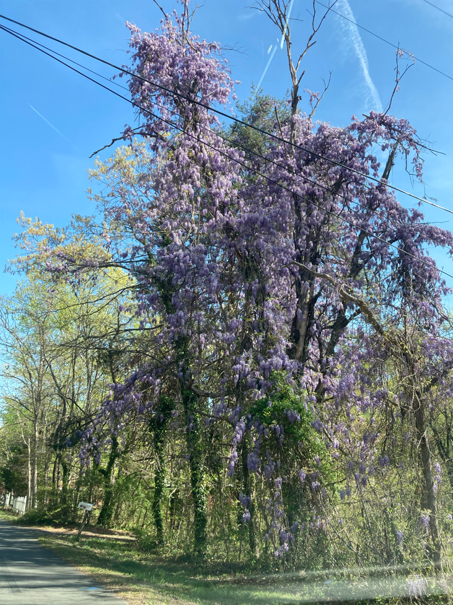
Multiflora Rose – Not a vine, but still a tree- killer
All the invasive shrubs kill tree seedlings by shading and crowding them out, but this is a climbing rose that can smother trees up to about 15 feet. It grows so thickly in places that you would need a suit of armor to walk through the woods.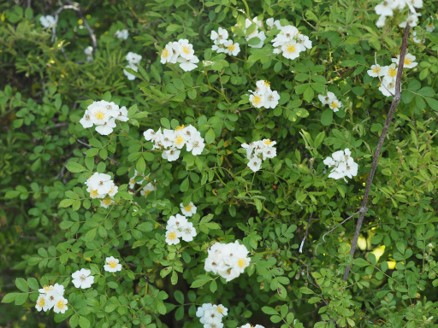
Other vines that kill trees include Sweet Autumn Clematis, Mile-a-Minute, and Japanese Hop. The latter two are annuals that come back each year from seed.
Rescuing trees from invasive vines
Simply cutting the vines at the base will save the tree temporarily until you have time to work on killing the roots. The vines above will dry out and fall off on their own.
Click on an image below for details (instructions open in a new window):
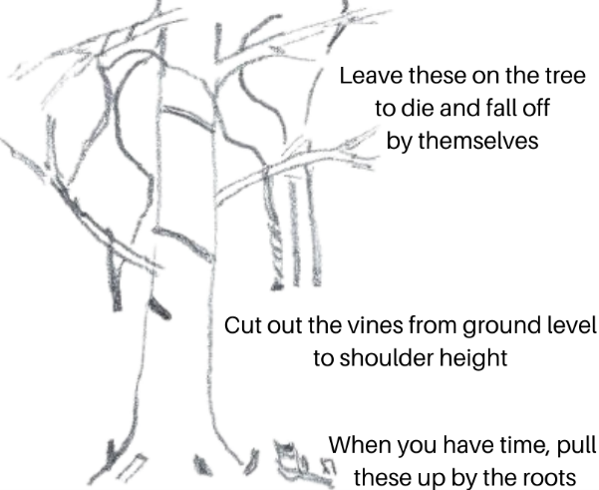
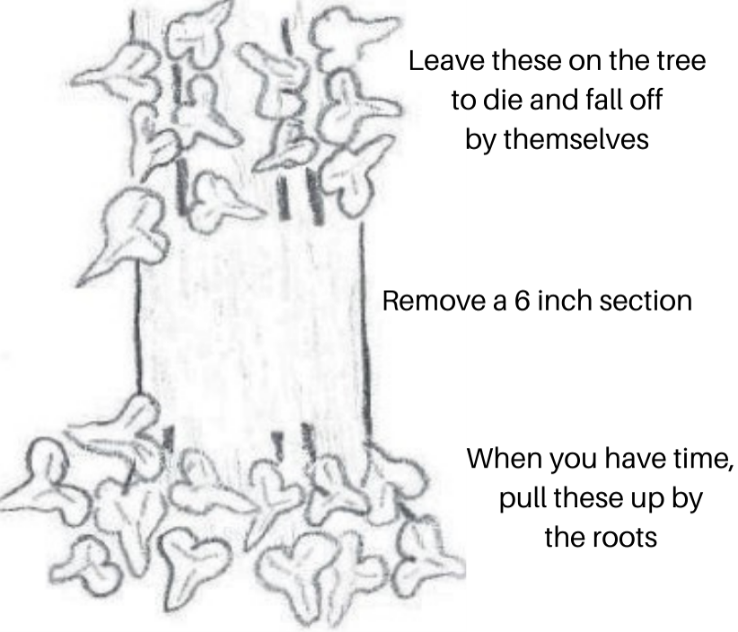
See our Overview of Invasive Plant Management
Species-specific details:
- Kudzu
- Wisteria
- Porcelainberry
- Multiflora Rose
- Japanese Honeysuckle
- Asiatic Bittersweet
- English Ivy
- Wintercreeper
- Five-leaved Akebia
How to ID these tree-killers
| Need more help ID'ing? Send focused, original-sized, photos to
|
Need an ID cheat sheet? Want a longer version?
Looking for printable, bilingual (English and Spanish) ID sheets?
Interested in training? In person training events are held periodically by various groups. Check our calendar for opportunities.
To see more photos and information of invasive vines, you can click on the plant below, or you can view all the species.