
English Ivy
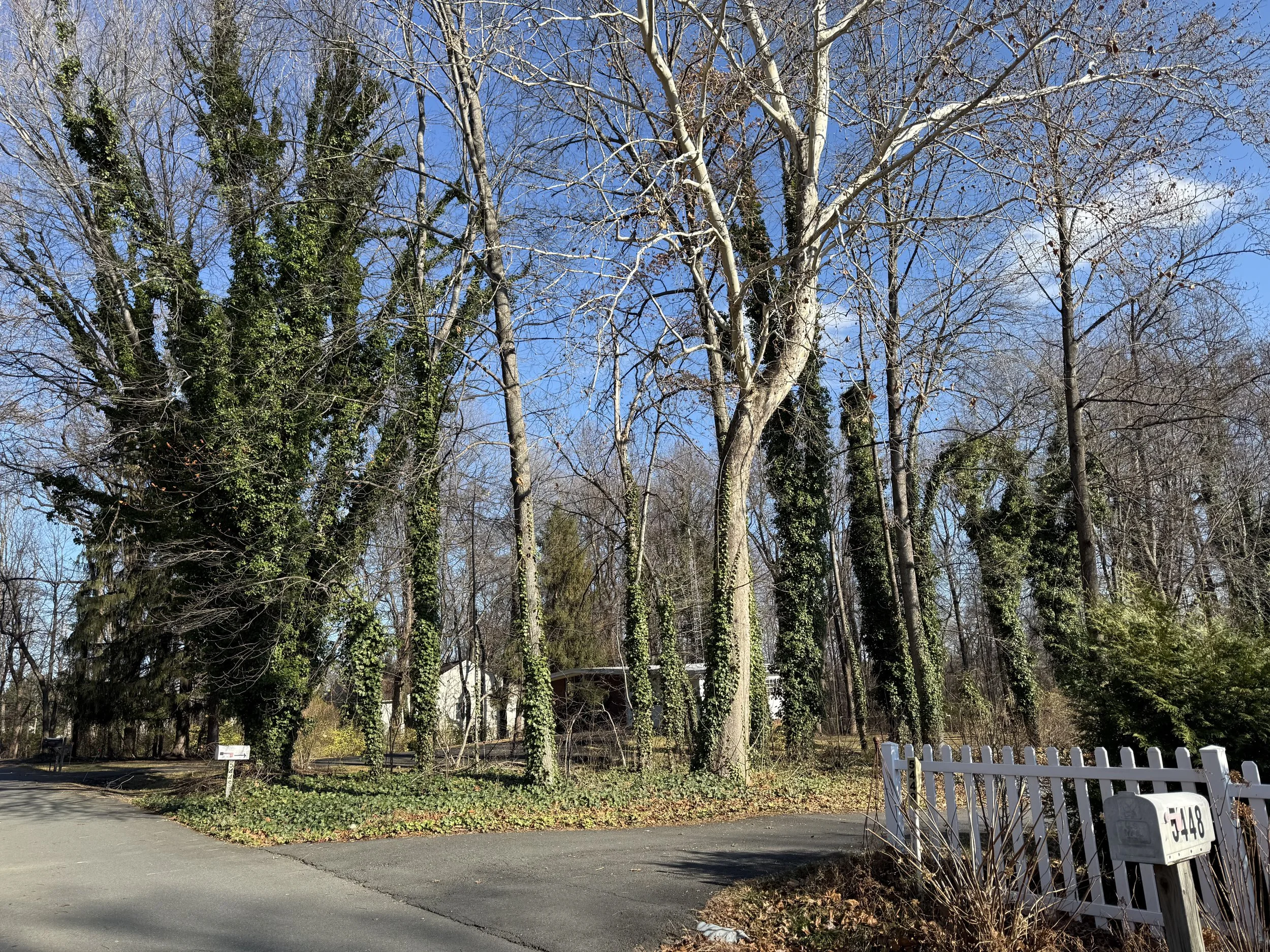
English ivy (hedera helix) can look charming in pictures of a cottage in the British countryside, but it is not native to the Americas and has a detrimental impact to our environment. Fully grown, which can be up to 90 feet or more on a fully-grown tree, ivy spreads not just by extending its vines, but also by birds eating its fruit and then defecating the seeds further away.
Why is such a pretty plant bad?
● It’s a climber, weighing trees down and slowly weakening and killing them. The vines also block sunlight for the tree’s leaves.
● It provides shade and shelter for mosquitoes and small rodents to breed.
● If left to climb a home or other building for long enough, it can eat into the mortar and cause damage.
● It smothers and crowds out native species.
How to remove it?
● If the infestation isn’t large, it’s easy enough to hand pull. You can make the job smaller by cutting the vines first and by using a shovel to dig up the roots. If you cut them just right, it’s also possible to roll up cut vines like a carpet, making removal even easier!
● For larger patches of ivy, you can mow them all the way to the ground, watch for new leaves, and mow repeatedly until it dies.
● Do not compost the roots - they need to be disposed of so they cannot re-root and start to grow again. If they are completely dried out, they cannot re-root and can be disposed of safely. Otherwise, put them with your usual garbage and not yard waste.
● What about herbicides? The difficulty is the waxy leaves, which prevent saturation. For best results, though, you need a higher concentration than comes in the ready-to-use bottles. Newer leaves are more susceptible, making spring a time when you can try more dilute herbicides
Make sure as many of the roots are removed as possible, and keep an eye on the site for a few years afterward to check for and remove new growth. Pulling baby ivy is much easier than dealing with a fully grown vine.
What to do about English ivy if you can’t remove it?
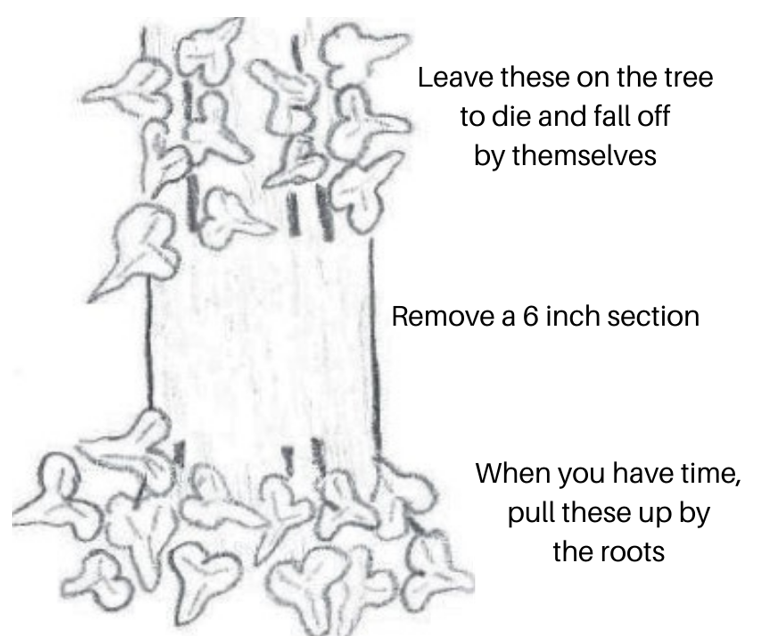
● The bare minimum is to keep it off of your trees. You can easily cut the vines at the base of the tree, killing anything growing above that point. If the vines aren’t too large, pull them off the tree. If they are large and heavy, take care not to do more harm to the tree. Cut them into sections, and prioritize removing anything hanging from branches. Doing this once or twice a year is usually sufficient to keep it from harming your trees, though you will still have issues with your mosquito habitat.
● Keep it inside. English ivy grows well in pots and can be kept as an indoor plant. If you love the look of it and don’t want to get rid of it entirely, take a cutting, put it in a pot, and then rip out the rest. When it is time to dispose of it, be sure to put it in the trash and not in your yard!
Join the movement! Fairfax Tree Rescuers PRISM is a community-wide effort to save our trees from invasive plants. https://www.fairfaxprism.org/