
 Attractive Shrubs That Are Quietly Spreading
Into Our Forests and Neighborhoods
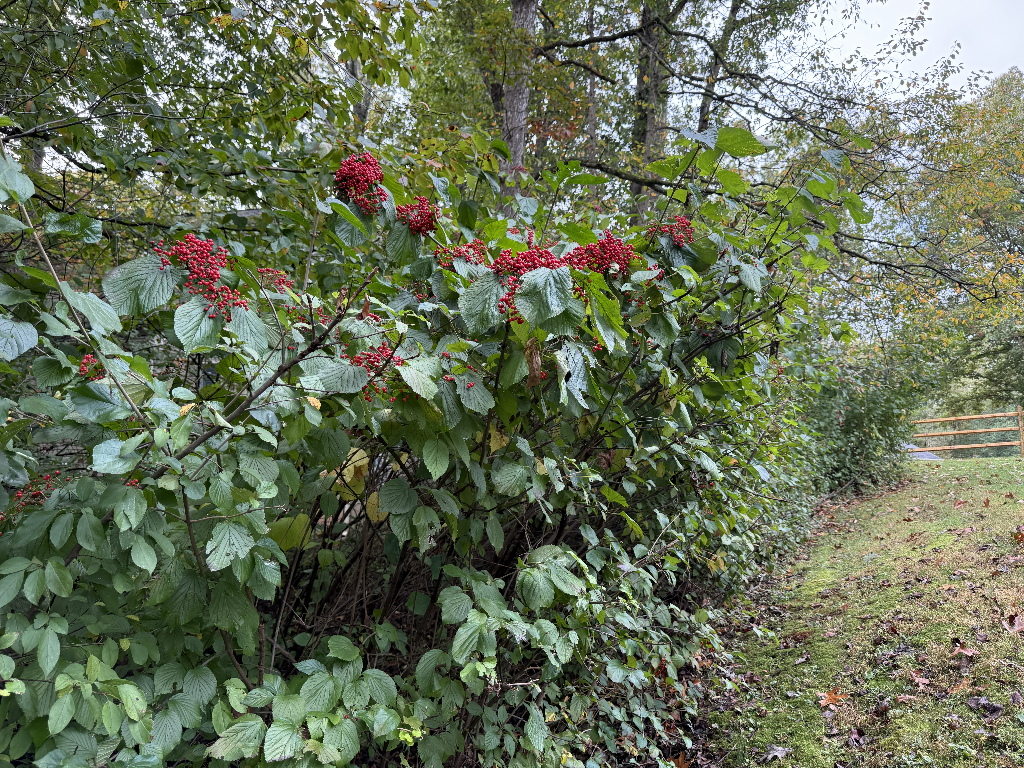
Non‑native viburnums - including species like Linden viburnum (Viburnum dilatatum), Doublefile viburnum (V. plicatum), and Leatherleaf viburnum (V. rhytidophyllum) - have long been sold as ornamental shrubs. They’re showy, hardy, and easy to grow. But in recent years, these imported species have begun escaping into natural areas across Northern Virginia, where they are spreading rapidly and outcompeting native plants.
Local land managers, park staff, and native plant societies are now sounding the alarm: non‑native viburnums are becoming invasive, and homeowners play a key role in slowing their spread.
By contrast, the native viburnums are considered keystone plants, with berries of high nutritional value for birds and with leaves that host over a hundred species of caterpillars. It is important to plant and protect them, because they are largely missing in many of our natural area. Deer prefer the species they evolved with over the non-native species which are crowding out the natives.
What are they? Why are they becoming a problem?
Many viburnums sold in garden centers are not native to North America. While they behave well in landscaped yards, they can spread aggressively in nearby woods and stream valleys.
Once established, non‑native viburnums can:
- Form dense shrub layers that block sunlight
- Displace native viburnums
- Reduce food sources for wildlife that depend on native berries
- Alter forest regeneration by preventing tree seedlings from growing
How can you identify them?
While each species looks a bit different, all viburnums share several traits:
- Opposite leaves (paired along the stem)
- Showy white spring flowers in flat or rounded clusters
- Shrub height typically 6–12 feet
- Dense, multi‑stemmed growth that forms thickets
Identifying specific viburnums is not at all easy and in many cases requires detailed study of the leaves. See the Cornell guide for details. Berry color can help a little at the end of the season, though all of them change color as the season progresses. The berries of most non-native viburnums (and some Virginia native ones) end up bright red or orange in the fall as opposed to the blue-black of native Arrowood and Blackhaw viburnums. The native Possumhaw and Mapleleaf berries are pink or red before they turns darker. The easiest strategy is to learn to identify the native viburnums and treat all others as invasive.
How do they spread?
Non‑native viburnums spread primarily through:
- Bird‑dispersed seeds - berries are attractive, and birds drop seeds into natural areas, far from the original plant
- Improper disposal - yard waste piles can introduce seeds into parks and stream corridors
How can homeowners remove or manage them?
You can help protect local forests by removing invasive viburnums from your yard and replacing them with native alternatives.
Native alternatives
Northern Virginia has many beautiful native viburnums and other shrubs that support birds, pollinators, and local ecosystems, such as:
- Arrowwood Viburnum (Viburnum dentatum)
- Blackhaw Viburnum (Viburnum prunifolium)
- Possumhaw Viburnum (Viburnum nudum)
- Mapleleaf Viburnum (Viburnum acerifolium)
- Winterberry Holly (Ilex verticillata)
- Ninebark (Physocarpus opulifolius)
These species offer spring flowers, fall color, and berries - without the invasive behavior.
---
Sources: University of Maryland Extension; NC State Extension; USDA Forest Service; Virginia Native Plant Society; Cornell University