
Mini-grant Helps Encourage Park Visits in Reston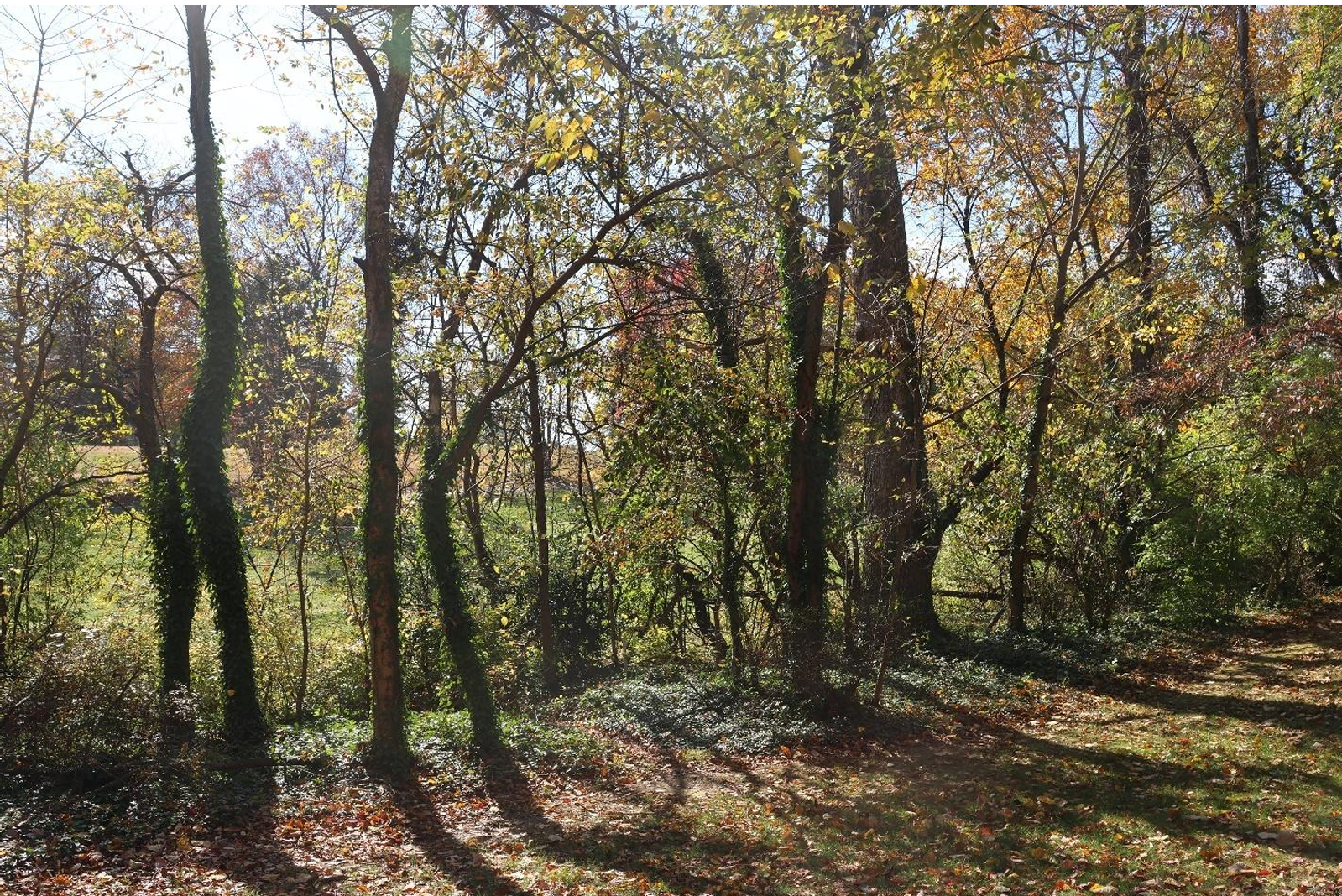 Hunters Green site before restoration
Hunters Green Cluster is a townhome community noted for their unique architectural design that blends with nature. Invasive plants on their public spaces have caused significant issues for both wildlife and residents. The park is being underutilized due to the number of mosquitoes likely caused by the English ivy. Before removal, the ivy was providing cover and breeding grounds for the mosquitoes as it was blocking a drainage hole in the park. Hunters Green hopes to host more events and increase foot traffic now that mosquitoes are reduced.
The Issue: The community faces a serious problem with invasive vines, shrubs and trees that emerged from deliberate plantings in the 1970s, decades of inattention, and encroachment from the nearby golf course property. The impact is serious in many ways: invasive plants are killing trees, displacing native vegetation as wildlife habitat, contributing to mosquito outbreaks, and the unsightly vines are bad for home sales. The park used to harbor attractive native plants like Indian Pipes, Monotropa uniflora, but these no longer grow where English Ivy has taken over.
Main Species of Concern: Japanese honeysuckle, invasive bittersweet, English ivy, multiflora rose, highbush honeysuckle, tree of heaven, and mile-a-minute
Previous Work: Hunters Green used a tactical approach to removal in the past. This included spraying and digging up bamboo, and cutting/spraying trees of heaven.
Management Strategy
Hunters Green is working on a 5-year plan that involves dividing the community into sections and addressing one to three sections each year. They have designated a community representative (Charles Colby) who is also a volunteer with Fairfax PRISM.
Hunters Green hired their contractor, Granite Hills, to complete all the work for the grant-funded project. A $3000 grant was given to spend on the contractor, and Hunters Green matched more than 100% of the grant, paying Granite Hills $6,145.53 for the project. The contractors did the following:
- Cut plants at the base and immediately apply herbicide. This includes vines crawling up trees, shrubs, and plants acting as groundcover.
- Manually remove multiflora rose.
- Remove plant debris from the site.
- Top-dress cleaned up areas with shredded leaf debris or woodchip to control erosion and enrich soils.
Project Outcomes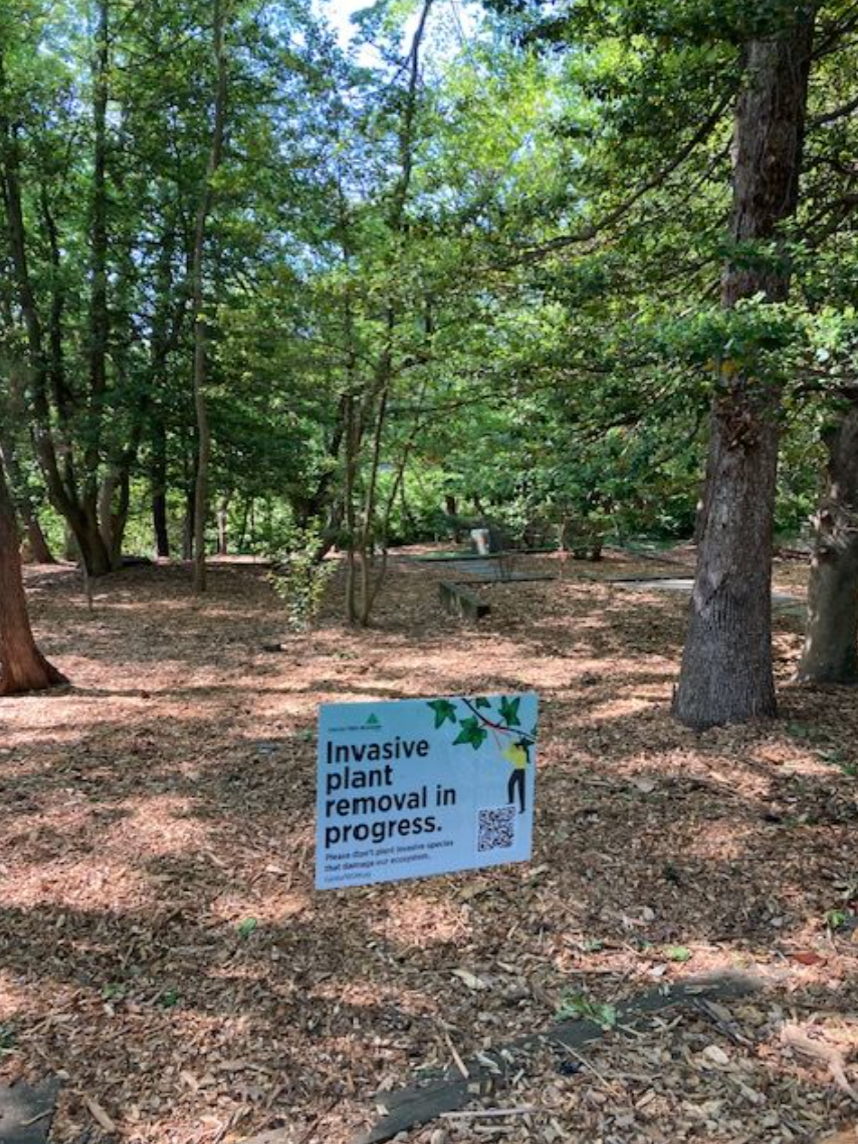 After Restoration
Trees Saved: The project helped rescue 82 trees on the site. An additional 88 trees were saved at an adjacent site during two volunteer events hosted by the association involving 32 people to remove invasive vines (although these volunteer hours were not recorded for the grant contribution match because Hunters Green had already met the match in cash).
Scope of the Grant: The grant helped rescue ⅓ acres of the property.
Financial Summary
Hunters Green requested a reimbursement of $3,000.00 and were required to meet a 50% contribution match of $1,500.00. They matched contributions by funding their project directly, and put $3,145.53 towards the project, exceeding the minimum match by $1,645.53.
Community Education
- To get support for the long-term goal, Hunters Green is launching a highly publicized demonstration project to show the results of rescuing trees and returning land to native flora. They wish to return the area to an attractive and usable space, showing the community the benefit of tree rescue projects.
- Hunters Green contains 118 homes and approximately 300 residents. They set up a table on November 15 for the PRISM Week of Action, handed out educational materials and instructions on vine cutting, and had a PRISM volunteer available to answer questions and demonstrate vine cutting.
- They provided information to residents about invasive plans via email communications, distributing doorhangers, and signs on the demonstration site.
Next Steps
The association will continue its 5-year plan and continue moving onto other sections of their property. They will focus on portions that share a 1.5 mile boundary with the golf course. They estimate that the entire 5-year plan will cost around $100,000.