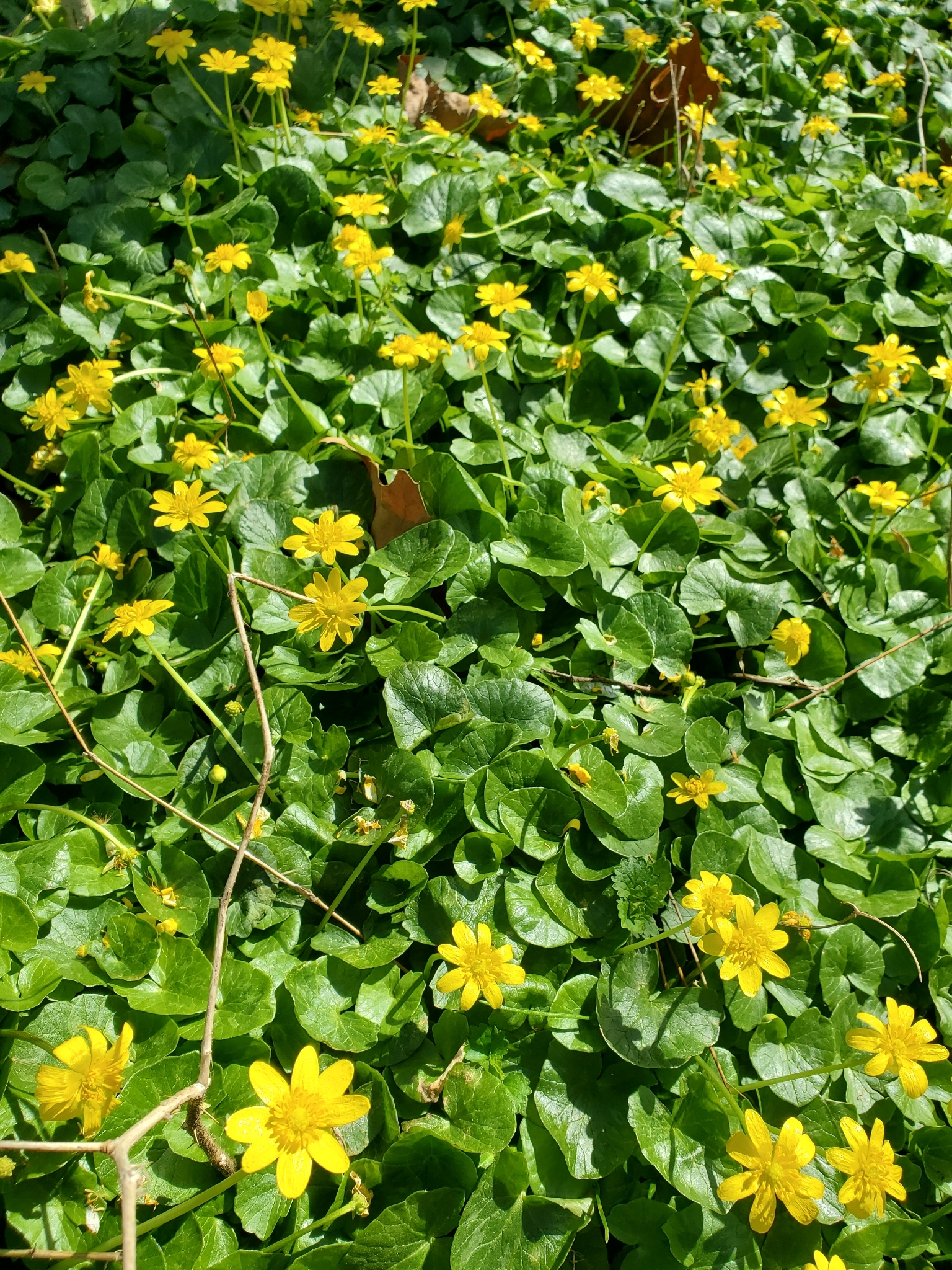
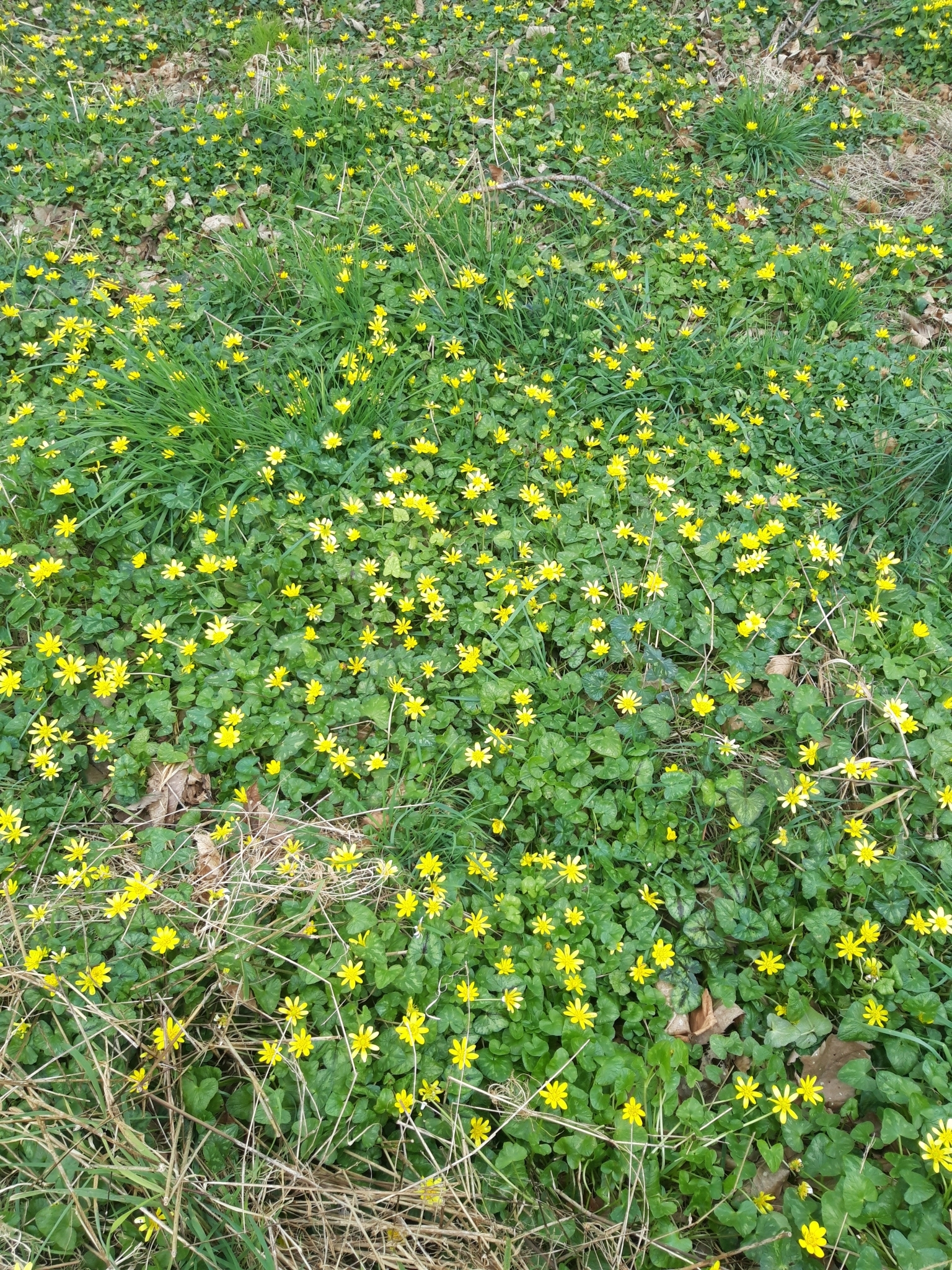
Lesser Celandine (Ficaria verna)
A Small Spring Flower That Can Quickly Take Over
Lesser celandine may look like a cheerful early‑spring wildflower, but don’t be fooled. This plant spreads fast, forms thick carpets of leaves, and can wipe out entire patches of native wildflowers in just a few years. In places like Maryland, Northern Virginia, and D.C., it has already become a major invasive threat — and now it’s spreading into new areas of Virginia as well.
Our stream valleys in Fairfax/Falls Church are particularly threatened. Many have already been blanketed by Lesser Celandine, eradicating the native flowers. Everything rolls downhill, so if you see it in your yard, please dig it out immediately! You'll want to do this anyway, because otherwise it will quickly take over your lawn.
What is it? Why don’t we like it?
Lesser celandine is a nonnative buttercup‑family plant from Europe. Although it was once planted in gardens, it easily escapes into forests, fields, and lawns. It forms a continuous thick mat of foliage that smothers low‑growing plants and prevents wildflower seeds from sprouting.
It can also be toxic to livestock. The fresh leaves contain a chemical poisonous to mammals. Cattle usually avoid it, but in early spring — when other forage is scarce — they may eat enough to become sick.
Once introduced, lesser celandine can eliminate native wildflowers within two to six years.
How can you identify it?
- Flowers: Six or more bright yellow petals with a central tuft of stamens
- Sepals: Three green sepals beneath the petals (a key ID feature)
- Leaves: Shiny, dark green, heart‑shaped or rounded, with pale undersides and visible veins
- Timing: Leaves appear in late winter; flowers bloom March–April; plants go dormant when heat arrives
- Some forms also produce **bulbils** at the leaf bases — tiny structures that drop off and root easily, helping the plant spread “like wildfire.”
How does it spread?
This plant spreads in several ways:
- Expanding root systems that send up new crowns
- Tubers that break off and move with soil, animals, or water
- Bulbils that drop to the ground and root
- Seeds that travel short distances
- Flooding, mowing, and soil movement all help it spread rapidly.
How can you remove it?
Controlling lesser celandine requires persistence over several years.
- Use an approved herbicide
- Repeat treatments: Because tubers and bulbils are easily missed, multiple years of treatment are needed.
- Avoid disturbing soil: Digging or pulling can spread tubers unless done extremely carefully.
What looks similar?
- Marsh marigold, a native wildflower, resembles lesser celandine but has:
- Five to nine petal‑like sepals (not six petals)
- No green sepals
- Upright flowers
- Clumping growth, not mats
--------------------------------------------------------------------------------------------
Source: Blue Ridge PRISM – Lesser Celandine Early Detection and Rapid Response (2021).